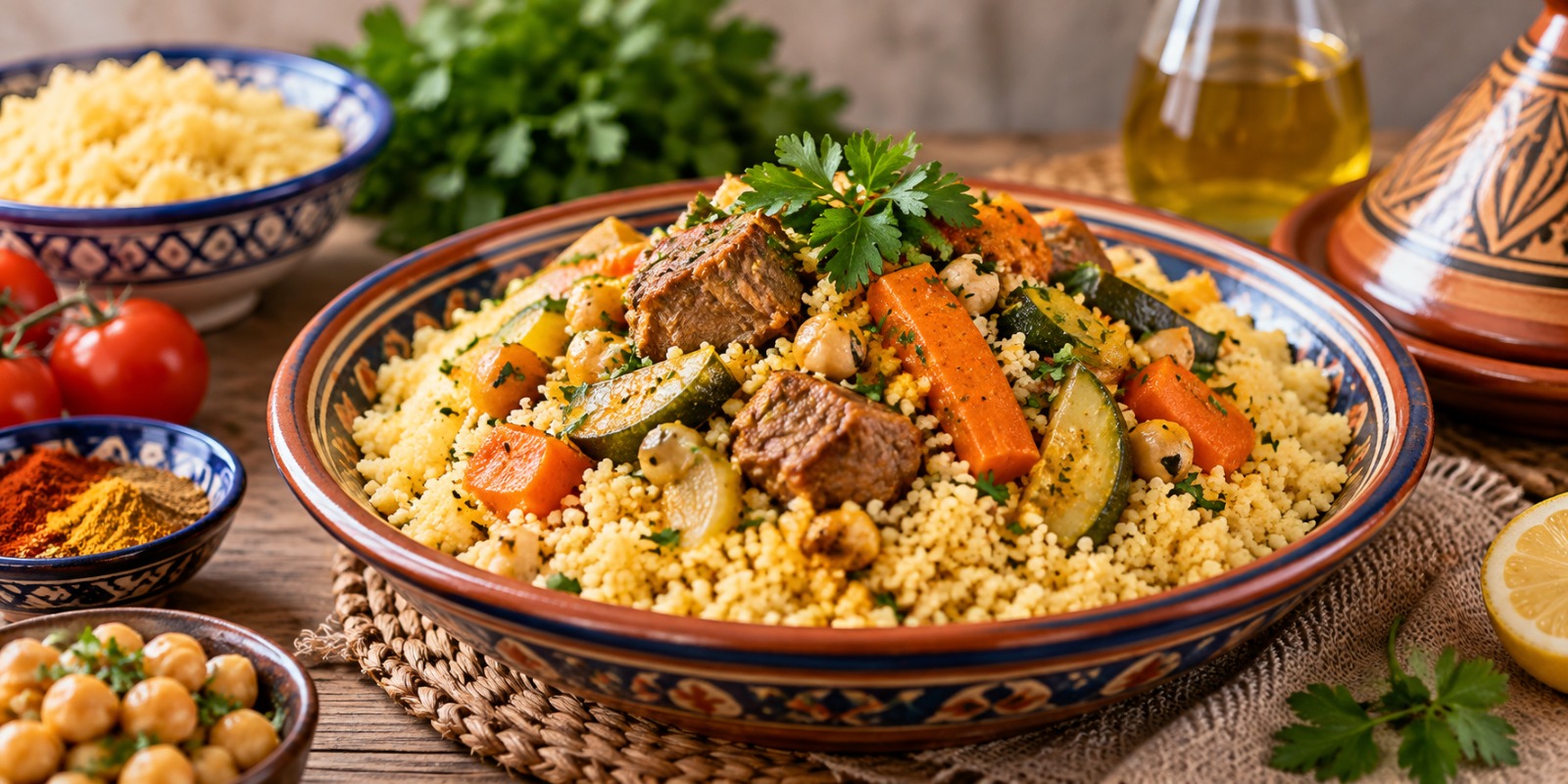
Kouskousi: Meaning, Origins, Preparation and Culinary Uses
Kouskousi is a term that can cause some confusion because it appears in different culinary contexts and does not always have one universally agreed definition. In many modern references, it is closely connected with couscous, the well-known North African food made from small granules of semolina. In some Mediterranean contexts, however, similar spellings may also describe small pasta-like products. Understanding the ingredients, preparation method and cultural background is therefore the best way to understand what Kouskousi actually refers to.
What Is Kouskousi?
In the most common interpretation, it refers to a Couscous-style Food made from durum wheat semolina. The semolina is traditionally moistened, rolled into tiny granules and steamed until light and tender.
Unlike rice, which is a naturally occurring grain, couscous is produced by processing wheat. Its small size sometimes makes it look like rice or another cereal, but its composition is much closer to pasta because both foods are commonly made from durum wheat.
The spelling Kouskousi is less standardised than “couscous,” which means that its precise meaning can vary depending on the country, recipe or food writer using the word.
The Origins of Kouskousi
When the term is used to describe couscous, its culinary history is strongly connected with North Africa.
Couscous has been prepared for generations across countries such as Morocco, Algeria, Tunisia and Mauritania. It is not simply a side dish but an important part of traditional cooking, family meals and hospitality.
The preparation and consumption of couscous have deep cultural significance throughout the Maghreb. Families may have their own methods for preparing the semolina, choosing vegetables and seasoning the broth.
Recipes also vary according to region and occasion. One household may serve it with lamb and vegetables, while another may prepare it with chicken, chickpeas or fish.
This flexibility has helped the dish remain an important part of everyday cooking while also allowing it to adapt to different cuisines.
How Kouskousi Is Traditionally Prepared
Traditional preparation requires more care than the instant couscous commonly found in supermarkets.
Semolina is first moistened gradually with water. It is then worked by hand until tiny individual granules begin to form. The grains are separated carefully so that large lumps do not develop.
Traditional couscous is then steamed, often several times, until it becomes soft and fluffy.
In some traditional cooking systems, the couscous sits in the upper section of a special steamer while meat, vegetables and broth cook underneath. The steam rises through the grains, helping them cook while absorbing aromas from the meal below.
Modern versions are much easier to prepare. Pre-cooked couscous can often be covered with hot water or stock, left for several minutes and then loosened with a fork.
What Does Kouskousi Taste Like?
On its own, Kouskousi has a relatively mild flavour.
Its delicate taste is actually one of its biggest advantages because it works well with strong herbs, spices, sauces and broths. Rather than dominating a dish, it absorbs the surrounding flavours.
Depending on the recipe, it may take on savoury, spicy, sweet or slightly nutty characteristics.
Ingredients commonly paired with couscous-style dishes include roasted vegetables, chickpeas, chicken, lamb, dried fruits, nuts and fresh herbs.
Spices such as cumin, coriander, cinnamon, turmeric and paprika can also give the finished dish considerable depth.
Kouskousi and Couscous: Are They the Same?
In many cases, the two terms are used to describe essentially the same food.
However, the spelling Kouskousi should not automatically be assumed to have exactly the same meaning in every context.
Different languages and regions often develop their own spellings for foods, especially when a word moves between Arabic, French, English, Greek and other languages.
There are also Mediterranean foods made from tiny pieces of pasta that can resemble couscous visually. This is one reason that similar names sometimes become mixed together.
When there is uncertainty, the ingredient list and cooking instructions provide the clearest answer. A semolina product that is steamed or rehydrated is likely couscous, while a firm pasta product that requires boiling may belong to a different culinary tradition.
Kouskousi vs Rice
Kouskousi and rice can play similar roles on a plate, but they are different foods.
Rice is harvested directly as a grain. Couscous is made by processing semolina into small particles.
The textures also differ. Well-prepared couscous is light, fluffy and slightly delicate, while rice varieties can range from soft and sticky to firm and separate.
Both foods work well underneath stews, curries and vegetable dishes, which explains why they are sometimes used interchangeably in modern recipes.
Kouskousi vs Pasta
Comparing couscous with pasta is more appropriate because both are often produced from durum wheat.
The main difference is shape and production.
Traditional pasta is made from dough that is rolled or extruded into shapes such as spaghetti, penne or shells. Couscous consists of extremely small granules traditionally created by rolling moist semolina.
Some pasta products are also made into tiny balls or grains. These can resemble couscous closely, although they may require a completely different cooking method.
This similarity explains some of the uncertainty surrounding the word Kouskousi in international food writing.
Is Kouskousi Healthy?
Its nutritional value depends largely on the type used and the rest of the meal.
Standard couscous provides carbohydrates that can supply energy, along with a modest amount of protein. Whole-wheat versions generally contain more fibre than refined varieties.
A balanced couscous meal may include vegetables, chickpeas or lentils along with a source of protein.
Portion size also matters. A vegetable-heavy dish with moderate couscous is nutritionally different from a large serving covered in rich sauces.
People who avoid gluten should be particularly careful. Traditional couscous is made from wheat and therefore normally contains gluten.
Common Ways to Serve Kouskousi
One of the strengths of this food is its versatility.
It can be served hot with a stew, mixed with roasted vegetables or used as the base of a grain-style bowl. Once cooled, it can also become part of a salad with cucumber, tomato, herbs and lemon dressing.
In North African cooking, it is often served as part of a larger communal meal with vegetables and meat arranged over the couscous.
Modern cooks also use it alongside grilled chicken, fish, roasted vegetables and Mediterranean-style salads.
Its neutral flavour makes it suitable for both traditional recipes and contemporary dishes.
Frequently Asked Questions
What is Kouskousi made from?
When Kouskousi refers to couscous, it is generally made from semolina produced from durum wheat.
Is Kouskousi the same as rice?
No. It may resemble rice because of its small size, but couscous is a processed wheat product rather than a natural rice grain.
Does Kouskousi contain gluten?
Traditional wheat-based couscous contains gluten. People following a gluten-free diet should look for alternatives made from ingredients such as corn or rice.
How do you cook Kouskousi?
Traditional couscous is steamed, while many modern varieties are pre-cooked and only need hot water or stock before being fluffed with a fork.
Can Kouskousi be served cold?
Yes. Cooked couscous can be cooled and mixed with vegetables, herbs, olive oil and dressing to create a light salad.
Final Thoughts
Kouskousi is best understood as a flexible culinary term commonly associated with couscous and similar semolina-based foods. Its mild flavour, light texture and ability to complement vegetables, meats and sauces make it useful in a wide range of dishes. At the same time, variations in spelling and regional terminology mean that checking the ingredients and preparation method is important when encountering the term in a recipe or on a menu. For more clear explanations of unusual foods, terms and everyday topics, readers can continue exploring The Mating Press.
You May Also Read: Uploadarticle Health: A Complete Guide to Digital Health Content