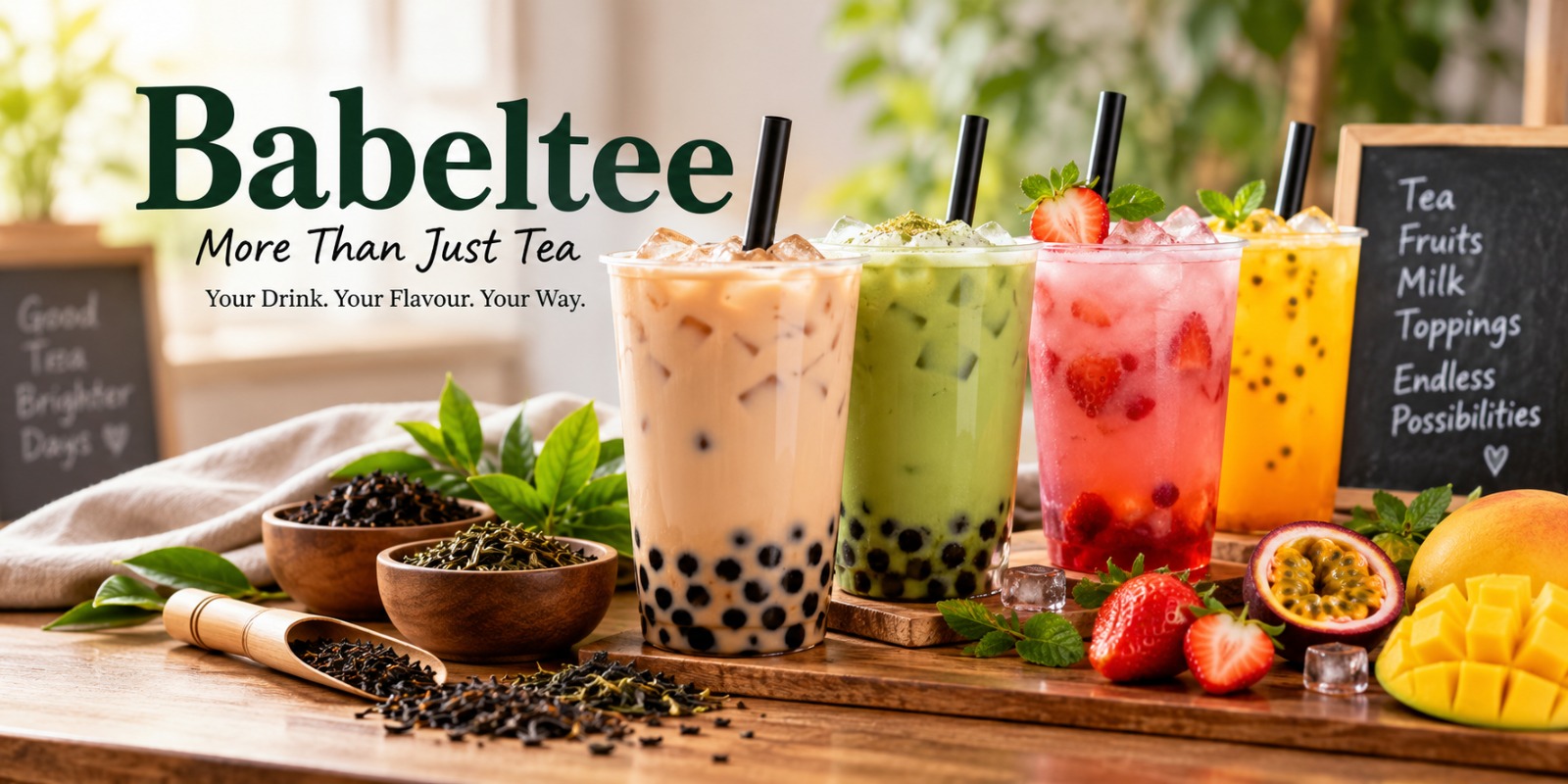
Babeltee Guide: Flavours, Toppings and Creative Tea Ideas
Babeltee is an unusual term that can be confusing at first because it does not have one universally established definition. In some online contexts, it is associated with tea-based drinks, creative beverage combinations, and bubble-tea-inspired recipes. In others, the word appears as a brand-style name or website identity with no direct connection to beverages. Because of this, understanding Babeltee requires looking at the context in which the term is being used rather than assuming it always refers to one specific product.
Unlike established drinks such as bubble tea, matcha, chai, or milk tea, there is no widely recognised traditional recipe or official history connected with the name. It is better understood as a modern and flexible term that may describe a customised tea drink or simply function as a distinctive online name.
What Is Babeltee?
The simplest explanation is that it is an informal term that has been used in connection with customised tea beverages.
A drink described this way may begin with a familiar tea base such as black tea, green tea, jasmine tea, or oolong tea. Other ingredients can then be added according to personal preference. These might include milk, fruit, syrups, herbs, sweeteners, tapioca pearls, or fruit jelly.
There is no fixed preparation method that every version must follow.
This is an important distinction because traditional drinks usually have a recognisable structure. Bubble tea, for example, is closely associated with Taiwanese tea culture and is often prepared with tea, milk or fruit flavouring, and chewy toppings. A drink carrying the Babeltee name does not have the same clearly documented definition.
You May Also Read: Kouskousi | Meaning, Origins, Preparation and Culinary Uses
Understanding the Meaning of Babeltee
The meaning of the word depends strongly on where it appears.
In beverage-related discussions, it is often presented as a flexible tea concept. This interpretation focuses on mixing flavours and ingredients rather than following one traditional recipe.
In other situations, Babeltee can simply be used as a creative name. Modern websites and businesses frequently use invented words because they are distinctive and memorable. As a result, seeing the term in a domain name or brand does not necessarily mean that the business sells tea.
This explains why different descriptions of the term can appear to contradict each other.
Rather than thinking of it as a single established product, it is more accurate to consider it a name that can have several uses.
Is Babeltee the Same as Bubble Tea?
Babeltee and bubble tea are not necessarily the same thing.
The similarity between the two names makes the comparison understandable, especially because some versions described online include tapioca pearls and milk tea ingredients. However, bubble tea has a much clearer identity.
Bubble tea originated in Taiwan and became internationally recognised during the late twentieth century. Modern versions may contain milk tea, fruit tea, tapioca pearls, popping boba, jellies, or other toppings.
By comparison, there is no documented standard establishing exactly what must be included in a Babeltee-style drink.
A beverage using the name could resemble bubble tea closely, but another version might simply consist of chilled tea, fruit, and honey.
The two concepts can therefore overlap without being identical.
Common Ingredients Used in Babeltee-Style Drinks
Because there is no official recipe, almost any tea-related ingredient may be used.
A typical preparation could begin with black tea. Its stronger flavour works well with milk, cream, and sweeteners. Green tea provides a lighter base and pairs naturally with citrus or tropical fruit.
Jasmine tea can add floral notes, while oolong offers a deeper and slightly roasted character.
After choosing the tea, other ingredients may be included.
Milk or plant-based alternatives can create a creamy texture. Popular options include oat, almond, coconut, and soy milk.
Fresh fruits such as mango, strawberry, peach, lemon, or passion fruit can give the drink a refreshing quality. Flavoured syrups may also be used when a sweeter beverage is preferred.
Toppings are optional. Tapioca pearls, popping boba, fruit jelly, or aloe pieces can make the drink feel more similar to modern bubble tea.
How to Make a Simple Babeltee-Inspired Drink
Making a drink inspired by this concept is straightforward because there is no strict formula to follow.
Begin by preparing a cup of your preferred tea. Black tea works particularly well for creamy drinks, while green or jasmine tea suits fruity combinations.
Allow the tea to cool if you are making an iced beverage.
Next, add a small amount of sweetener. Honey, simple syrup, brown sugar, or another sweetener can all work depending on the flavour you want.
For a creamy version, add milk or a dairy-free alternative.
For a fruit version, add fresh fruit, juice, or fruit puree.
Finally, serve the drink over ice and add optional toppings such as tapioca pearls or fruit jelly.
The main idea is personalisation rather than following a rigid recipe.
Why the Term Can Be Confusing
One reason Babeltee is difficult to define is that the name appears in several unrelated contexts.
When a newly created word is used online, different writers and websites may begin assigning their own interpretations to it. One source might describe it as a beverage concept, while another may use it purely as a brand or web identity.
Without an established organisation, recognised inventor, or traditional history confirming one definition, it is difficult to treat every online explanation as equally authoritative.
For readers, the safest approach is to examine the context.
If the term appears in a recipe or beverage article, it probably refers to a tea-based concept. If it appears as a website or company name, the meaning may be entirely different.
Does Babeltee Have a Traditional Origin?
There is currently no reliable historical evidence connecting the term with a traditional tea culture.
Established beverages generally have identifiable cultural roots. Matcha is closely associated with Japanese tea traditions, masala chai with South Asian tea culture, and bubble tea with Taiwan.
No comparable historical record has been established for this term.
Claims presenting it as an ancient drink or long-standing traditional recipe should therefore be treated cautiously unless reliable documentation is provided.
At present, it is better described as a modern informal concept.
Can Babeltee Be Made Without Milk?
Yes. Since there is no fixed recipe, milk is completely optional.
A refreshing version can be made with green tea, lemon, fresh fruit, and ice. Herbal teas can also provide a caffeine-free base depending on the ingredients used.
This flexibility is one of the most interesting aspects of the concept.
Someone who enjoys creamy drinks can make a milk-based version, while another person can create a light fruit tea using entirely different ingredients.
Frequently Asked Questions
What is Babeltee?
Babeltee is an informal term sometimes used for customised tea-based beverages. There is no universally accepted recipe or official definition.
Is Babeltee another name for bubble tea?
Not exactly. The two can be similar, especially when tapioca pearls or milk tea ingredients are used, but bubble tea has a recognised Taiwanese origin and a more established identity.
What ingredients are used in Babeltee?
Possible ingredients include black tea, green tea, jasmine tea, milk, fruit, syrups, honey, tapioca pearls, fruit jelly, and ice.
Can Babeltee be made at home?
Yes. A simple version can be made by brewing tea and combining it with fruit, milk, sweetener, or toppings according to personal preference.
Is Babeltee a traditional tea?
There is currently no established evidence showing that it is a traditional tea with a recognised historical origin or standard preparation method.
Final Thoughts
Babeltee is best understood as a flexible and evolving term rather than a clearly defined traditional beverage. In tea-related contexts, it can describe creative drinks made with different teas, fruits, milk, sweeteners, and optional toppings. Its similarity to bubble tea explains some of the confusion, but the two should not automatically be treated as identical. For readers interested in unusual terms, modern drink ideas, and emerging online concepts, The Mating Press can continue to provide clear explanations without presenting uncertain claims as established facts.
You May Also Read | Uploadarticle Health: A Complete Guide to Digital Health Content