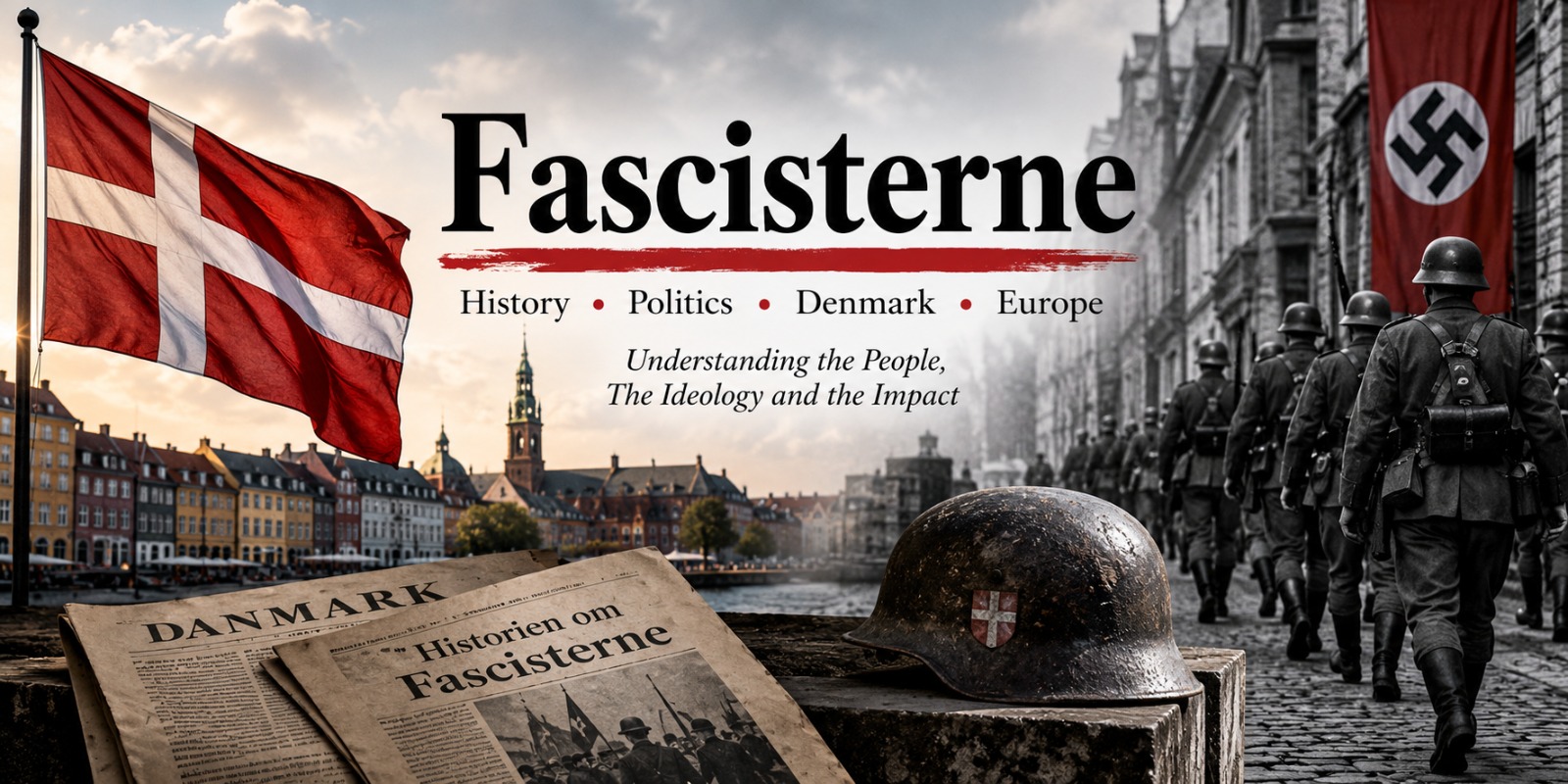
Fascisterne: Meaning, History and Context Explained
The word Fascisterne may seem unfamiliar to English-speaking readers, especially when it appears in Danish articles, historical texts, documentaries, or discussions about twentieth-century European politics. In simple terms, Fascisterne is a Danish word meaning “the fascists.” However, understanding the term properly requires more than a direct translation. It is connected with the history of fascism, political movements in Europe, and Denmark’s own experience during the period before and during the Second World War.
What Is Fascisterne?
So, what is Fascisterne? In Danish grammar, fascist refers to a person who supports fascism. The plural form is fascister, meaning “fascists,” while the definite plural form fascisterne translates naturally as “the fascists.”
This means that Fascisterne is not automatically the name of one political organization. Instead, it is a general Danish term that can describe a particular group of fascists depending on the context.
For example, a Danish history book discussing Benito Mussolini may use the term when referring to Italian fascists. In material about Denmark during the 1930s or 1940s, it may refer to Danish fascist or National Socialist supporters.
The Meaning Behind the Word Fascisterne
The root of the word is connected with fascism, a political movement that developed in Europe during the early twentieth century.
Historically, fascist movements emphasized strong nationalism, centralized political authority, opposition to liberal democracy, and the idea that the interests of the nation should take priority over individual interests.
The Danish word for fascism is fascisme. A person supporting fascism is a fascist, while multiple supporters are fascister. Adding the Danish definite ending produces fascisterne.
This grammatical structure is similar to the English difference between “fascists” and “the fascists.”
How Fascism Developed in Europe
Fascism became particularly influential after the First World War. Europe was experiencing major political, social, and economic disruption, and several authoritarian movements gained support during this period.
Italy became the country most closely associated with the early development of organized fascism. Benito Mussolini founded a fascist political movement and later became the country’s dictator.
His movement promoted intense nationalism, political centralization, militarism, and rejection of liberal democratic institutions.
Fascist movements later developed in other parts of Europe, although they did not all follow exactly the same ideology or political structure.
Germany under Adolf Hitler is generally categorized by historians as a fascist dictatorship, but German National Socialism also had distinctive features, particularly its extreme racial ideology and antisemitism.
Fascisterne and Denmark
Denmark also experienced political movements influenced by fascism and National Socialism.
One of the best-known organizations was Danmarks Nationalsocialistiske Arbejderparti, commonly abbreviated as DNSAP. It was founded in 1930 and was influenced heavily by the German Nazi Party.
Frits Clausen became the party’s leader in 1933.
Despite its visibility, DNSAP never became a dominant political force in Denmark. In the Danish parliamentary election of 1939, the party received approximately 1.8 percent of the vote and won three seats.
Even during the German occupation of Denmark, its electoral support remained limited. In the 1943 parliamentary election, the party received just over two percent of the vote and again secured three seats.
These results show why historical context matters when discussing Danish fascists. Their existence did not mean that fascist ideology enjoyed widespread electoral support throughout Danish society.
Fascisterne During the German Occupation
Germany invaded and occupied Denmark on 9 April 1940.
The occupation created a complicated political environment involving the Danish government, German authorities, resistance groups, collaborators, and National Socialist organizations.
DNSAP hoped the occupation would allow it to gain greater political power. However, German authorities initially continued cooperating with the existing Danish political system rather than replacing it with a DNSAP government.
Some Danish National Socialists cooperated actively with Germany, but historians distinguish between different kinds of cooperation, political membership, military service, ideological support, and other forms of collaboration.
For that reason, the word Fascisterne should not be used carelessly as a blanket label for everyone associated with Denmark during the occupation.
Fascism and Nazism: Are They the Same?
Fascism and Nazism are closely related historically, but the two terms are not completely interchangeable.
Fascism is a broader political category associated with authoritarian nationalism, opposition to liberal democracy, strong centralized leadership, and suppression of political opposition.
Nazism, or National Socialism, developed specifically in Germany under Adolf Hitler.
Nazi ideology shared several characteristics with fascism but also placed racial hierarchy, antisemitism, territorial expansion, and ideas about supposed biological superiority at the center of its worldview.
This distinction matters when translating historical material. A Danish writer using fascisterne may be describing fascists generally, while nazisterne more specifically means “the Nazis.”
Why Context Matters When Using the Term
Political terms can change meaning depending on where and how they are used.
In a historical article, Fascisterne may have a precise meaning referring to documented supporters of fascist organizations. In modern political debate, however, terms such as “fascist” are sometimes used much more loosely as accusations against political opponents.
That broader usage can create confusion.
A reliable interpretation should therefore consider the historical period, country, political movement, and actions being described rather than relying only on the label itself.
The term carries significant historical weight because fascist governments and movements were associated with authoritarian rule, political repression, violence, militarism, and the destruction of democratic institutions.
The Historical Importance of Fascisterne
Understanding Fascisterne is useful for anyone reading Danish history or European political material.
The word provides a direct linguistic connection to a major period of European history. It may appear in discussions about Mussolini’s Italy, Hitler’s Germany, Danish National Socialism, resistance movements, wartime collaboration, or post-war political analysis.
It is also important to separate language from interpretation. The word itself simply means “the fascists,” but identifying exactly who is being described requires examining the surrounding text.
That approach avoids turning a general political term into the mistaken name of a specific organization.
How Fascisterne Is Used in Danish
The Danish noun follows a straightforward grammatical pattern:
- fascist — a fascist
- fascisten — the fascist
- fascister — fascists
- fascisterne — the fascists
This makes the meaning easier to understand once the Danish definite plural ending is recognized.
Related Danish words include fascisme for fascism and fascistisk for something described as fascist or relating to fascism.
Frequently Asked Questions
What is Fascisterne?
Fascisterne is a Danish word meaning “the fascists.” It is the definite plural form of the Danish noun fascist.
Is Fascisterne the name of a political party?
No. It is a general Danish noun rather than the official name of one specific political party or organization.
What is the difference between fascister and Fascisterne?
Fascister means “fascists,” while fascisterne means “the fascists.”
Were there fascist movements in Denmark?
Yes. Denmark had political organizations influenced by fascism and National Socialism, including DNSAP, although such movements remained limited in electoral support.
Does Fascisterne mean Nazis?
Not always. “Fascists” is a broader term, while Nazis specifically refers to followers of National Socialism. The exact meaning depends on the historical context.
Conclusion
Fascisterne is best understood as the Danish expression for “the fascists.” Although the translation is simple, the historical background includes the rise of fascist movements in Europe, the development of Italian Fascism and German National Socialism, and Denmark’s own political experience during the 1930s and the Second World War. Readers should always consider the specific country, organization, and historical setting when encountering the term. For more straightforward explanations of unusual words, historical topics, and cultural concepts, readers can explore The Mating Press.
You May Also Read: Classroom 15x: Games, GitHub, Unblocked Access and More